
Explore how retailers can use Odoo to improve their accuracy, enabling you to make data-driven decisions based on reliable data. The right Odoo POS system integration can transform retail operations into a high-performing revenue engine.
Are You Using Odoo POS Software or Underusing It?
Retail growth doesn’t fail because of bad software.
It fails because systems aren’t aligned with strategy.
Many retailers implement Odoo POS software expecting it to streamline billing, inventory management, and reporting – and it does.
But as operations grow more complex – more stores, more SKUs, eCommerce expansion, supplier variability – a critical realisation emerges.
A POS system processes transactions.
It doesn’t automatically create scalable growth.
Odoo POS software is a powerful foundation within a unified ERP ecosystem. However, without strategic integration, intelligent automation, and performance-driven optimisation, it remains a transactional tool rather than a growth engine.
To transform Odoo POS software into a scalable retail infrastructure, retailers need an architecture designed around their business model – not just features activated out-of-the-box.
That transformation requires structured implementation.

The Reality of Retail in Australia Today
Australian retail is one of the country’s largest private-sector industries, generating over $400 billion in annual sales and employing more than 1.4 million Australians. Despite its scale, many retailers struggle with disconnected systems and manual processes that limit growth.
Australian retail is competitive, margin-sensitive, and operationally complex.
Retailers must manage:
- Multi-location inventory
- Long and unpredictable supply chains
- Omnichannel customer expectations
- Seasonal demand volatility
- GST compliance and financial reporting
Customers expect:
- Real-time stock visibility
- Seamless online and in-store experiences
- Personalised loyalty programs
- Consistent pricing across channels
Standard Odoo POS software supports transactions.
But sustainable retail growth requires integrated systems, automation, and scalable architecture.
What Odoo POS Software Gets Right and Where It Falls Short
Odoo POS for small businesses is a solid introductory solution. It has an engaging UI, good reporting features, and out-of-the-box integration against the broader Odoo ERP suite, giving POS users a competitive advantage over their standalone counterparts.
However, as businesses expand, the following gaps could appear:
- Stock discrepancies between POS and actual inventories are commonplace without adequately defined syncing protocols.
- Multi-location prices and promotions usually require manual management.
- Stock may easily become out of sync between your eCommerce and your brick-and-mortar locations.
- Customer purchasing habits and loyalty are managed in distinct systems.
- Accounting reconciliations transform from an automated process into a manual end-of-day activity.
These gaps aren’t due to flaws in the Odoo POS software. They’re due to the lack of linkages between a generic out-of-the-box setup for Odoo POS and a system that is specifically designed to support your unique retail model.
Retail Challenges and What Strategic Implementation Changes
| Retail Challenges | Without Strategic Setup | With Strategic Implementation | Business Impact |
| Fragmented systems across POS, inventory, and finance | Data silos, manual reconciliation, and reporting delays | Unified ERP platform integrating POS, inventory, accounting, and CRM | Real-time visibility, faster reporting, improved decision-making |
| Poor inventory management | Stockouts, overstocking, and inaccurate forecasting | Automated inventory tracking with demand forecasting and replenishment rules | Reduced carrying costs, optimised stock levels, and higher margins |
| Multi-location complexity | Inconsistent pricing, disconnected branches, and limited oversight | Centralised control with multi-branch management and standardised processes | Operational consistency and scalable growth |
| Slow order fulfilment | Delays, manual order processing, and customer dissatisfaction | End-to-end order automation with integrated warehouse workflows | Faster deliveries and improved customer experience |
| Limited customer insights | Generic marketing, low retention, missed upsell opportunities | Integrated CRM with customer analytics and loyalty management | Higher customer retention and increased lifetime value |
| Compliance and reporting challenges | Manual compliance checks, audit risks | Automated financial reporting and regulatory compliance tools | Reduced risk and improved financial transparency |
| Inefficient workforce management | Overstaffing or understaffing, productivity gaps | Workforce planning and performance tracking tools | Optimised labour costs and improved productivity |
| Lack of scalability | System breakdowns during peak seasons | Cloud-enabled, scalable ERP architecture | Sustainable long-term growth and business resilience |

What This Looks Like in Practice
Envertis assisted a Melbourne based midsize retailer with four stores and a functioning Shopify online presence. They struggled with poor accuracy in inventory management, cancellations of online orders and the team’s time consuming task of manually reconciling their POS system to their accounting system for three hours per week.
After implementing Odoo POS through Envertis’ structured methodology, the following was realised:
- Real-time inventory sync across all store locations, as well as the online marketplace.
- Automated low stock alerts and purchase order triggers to eliminate manual re-order processes.
- Decrease financial reconciliation time from three hours per week to under 15 minutes.
- Centralised loyalty program, providing the marketing department with one view of customer behaviour across every channel.
The software didn’t change. The architecture did.
Odoo POS for Retail Businesses: A Platform Built for the Long Term
Unlike standalone POS systems, Odoo POS software is part of a unified ERP ecosystem.
It connects:
- Point of Sale
- CRM
- Accounting
- Inventory management
- HR
- Supply chain
When engineered correctly, this delivers:
- A single source of truth
- Reduced duplication
- Improved financial accuracy
- Lower long-term system costs
The platform is powerful.
The competitive advantage comes from how it’s implemented.
How Envertis Approaches Odoo POS Implementation Services
Envertis is a certified Odoo partner delivering structured Odoo POS implementation services across Australia.
Our process isn’t a plug-and-play install. It’s a deliberate, phased engagement built around your retail model.

This ensures your Odoo POS software evolves with your business.
Building a Future-Ready Retail Infrastructure
With properly implemented Odoo POS, Australian retailers can:
- Open new locations with consistent reporting
- Automate purchase order triggers
- Synchronise online and in-store pricing
- Centralise loyalty programs
- Improve forecasting accuracy
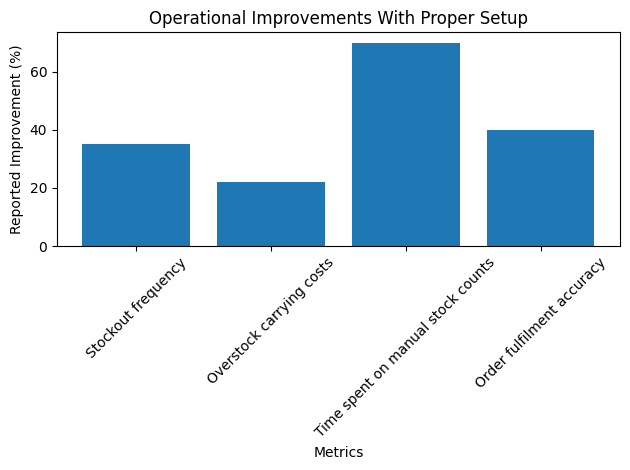
In Australia’s retail environment — where supply chains are extended, and demand fluctuates seasonally — intelligent inventory management is critical.
Envertis configures:
- Automated purchase order
- Low stock alerts
- Real-time monitoring
- Inventory variance reports
- Control mechanisms
We don’t just configure software.
We engineer retail performance systems.
Growth Requires Strategy, Not Just Software
The majority of retailers think buying Odoo POS solutions is the endgame. However, it’s actually just the beginning.
Retail success within Australia requires:
- Reporting through data
- Customer behaviour insights
- Synchronisation across multiple channels
- Automated financial reconciliations
- Infrastructure built for expansion
Envertis specialises in turning Odoo POS software into a performance-driven retail ecosystem tailored for Australian businesses.
Frequently Asked Questions
Q. Is Odoo POS software a good choice for small retail businesses?
A. Definitely, Odoo POS software is a cost-effective way for small businesses to get started and scale over time without requiring a large upfront investment. Envertis helps small-scale retailers configure the software so they do not incur reconfiguration costs later if their business grows and requires additional functionality.
Q. What is the difference between standard Odoo POS and a custom implementation?
A. The standard Odoo POS software has a core POS functionality. Envertis delivers a customised implementation, including tailored workflows, custom integrations, advanced reports, and configurations that align with your business model and growth objectives.
Q. Is Odoo POS software suitable for retail businesses in Australia?
A. Certainly! The Odoo POS system is compatible with Australian retail businesses, especially when used with a local partner like Envertis, which has experience implementing and configuring the software according to your business needs. The POS accepts GST-compliant payments, integrates with local payment systems, and can expand as your business grows.
Closing Thoughts
Odoo POS software is not the problem. Underutilised configuration is.
When Odoo POS is implemented without strategic alignment, it becomes a tool. When implemented correctly, it becomes a growth accelerator.
Envertis does not simply install Odoo POS software. We engineer performance-driven retail ecosystems through expert Odoo POS implementation services, tailored Odoo POS system integration, and advanced inventory optimisation designed for Australian market conditions.
If your Odoo POS for retail businesses is not delivering measurable retail growth, it is not configured for performance.

