

Businesses in Australia have been investing in cloud technology, automation and digital systems. However, acquiring technology is only the first step in modernising. Using technology effectively to improve day-to-day operations is the harder part, and Australian companies are now spending more on cloud products and automation. The real win comes when your tools work together and make each day easier.
That is why more owners are looking at Odoo in Australia. Odoo is one system that can run sales, stock, buying, money and reports in one place.
An ERP system can no longer be seen as merely a tool to record transactions and manage stock. As businesses transform, requirements have changed, and companies now need an integrated platform that combines sales, customers, purchasing, finance, stock, production, and reporting, along with the technical foundation for future automation and AI.
In this blog post, you’ll learn how to turn your Odoo ERP investment into real success. You will also learn what to look for in a partner to set it up for you.
The Real Problem: Too Many Tools That Do Not Share Data
Most businesses do not lack software. They have too much of it.
Your sales team may track leads in one app and send quotes from another. Stock may live in a spreadsheet. Accounts may sit in a separate program.
Now picture one customer order. It must manage inventory, initiate sales, arrange delivery and prepare invoices. If you do all these things manually, your employees enter the same information too many times. Errors are possible.
With Odoo Google Apps for Business, you can connect all these functions easily and effectively, though you may need some configuration to match your team’s actual workflow.
That is where Odoo business management software becomes strategically valuable.
Nevertheless, technology is only one part of the equation. How businesses choose, configure, and integrate Odoo will determine whether it becomes a typical business application or a truly interconnected operating platform.

Too Many Systems and Not Enough Connection?
As a certified top Odoo partner with more than 80+ Odoo implementations completed, Envertis maps your real business processes first.
Book a free consultation with our Odoo experts.Why Odoo ERP Australia Matters in 2026
Australian firms keep moving to cloud-based software solutions. So this is a good time to look at Odoo in Australia and rethink your core systems. The Odoo ERP solutions Australia firms use most cover CRM, sales, accounting, inventory, purchasing, manufacturing, eCommerce and projects.
That mix suits many industries, from wholesale and retail to manufacturing, logistics and professional services. With Odoo ERP Australia, the key is to pick the right apps for you.
Five Odoo ERP Benefits That Drive Growth
The biggest Odoo ERP benefits do not come from the software alone. They come from how you set it up and use it.
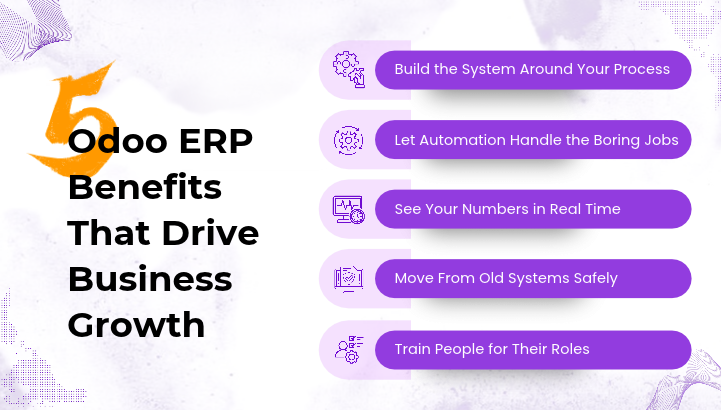
1. Build the System Around Your Process
A good setup starts with how your team works today. That means sales, buying, stock, accounts, approvals and the spreadsheets you rely on.
Then you decide what Odoo does out of the box and what needs a small change. This stops you from paying for custom code you don’t need.
2. Let Automation Handle the Boring Jobs
Automation means the system does repetitive tasks for you. For example, Odoo can create a purchase order when stock runs low. No one has to remember.
Odoo can also send invoices, chase payments, run approvals, and handle recurring bills. But only automate the tasks that truly eat up your team’s time.
3. See Your Numbers in Real Time
When data sits in five places, managers spend hours joining it up. With one system, sales, stock, cash and unpaid invoices show on one dashboard.
The goal is not more reports. It is the right number at the moment you need to decide.
4. Move From Old Systems Safely
Moving data is a careful job. First, choose what to bring across. Then clean it, match it to Odoo and test it.
Good planning keeps your business running while you switch. It also helps staff trust the new system from day one.
5. Train People for Their Roles
Even a great system fails if people do not know how to use it. Training works best when it fits each role.
Sales staff learn CRM and quotes. Warehouse teams learn stock and barcode scanning. Finance learns accounts and reports. Managers learn dashboards and approvals.
Why Local Rules Matter for Australian Businesses
Odoo ERP for Australian businesses must handle local rules. These include GST, BAS reporting, payroll and e-invoicing.
Odoo offers an Australian localisation for GST and BAS reports. Payroll and Single Touch Payroll usually need the right setup or a linked payroll app. A team that knows Odoo implementation Australia projects can set this up correctly from the start. That saves you costly fixes later.
Customise ERP Only Where It Counts
Good Odoo ERP customisation Australia projects stay lean. A partner should help you sort each need into one of four groups:
• Standard features: things Odoo already does with simple settings.
• Customisation: changes for needs that are truly unique to you.
• Integration: links between Odoo and other apps, like your online store.
• Process change: new ways of working that cut out extra manual steps.
Too much custom work makes the system hard to upgrade. Too little leaves real needs unsolved.
Consider Business ROI Beyond the Price Tag
ROI means return on investment. It is what you get back for what you spend. Your costs include the subscription, setup, data moves, training, support and upkeep. Your gains may include less admin, faster orders, better stock control and quicker replies to customers.
Write both lists down before you start any Odoo ERP Australia project. A clear plan shows what you are paying for and why. Do not assume an ERP brings a set return on its own.
How to Choose the Right Odoo Partner
Choosing Odoo is a software choice. Choosing your Odoo implementation partner in Australia is a delivery choice, and it matters just as much.
Odoo’s official partner directory lets you compare partners by industry, location, project size and certification. When you talk to partners, check for:
• Experience in your industry
• Both business and technical skills
• Knowledge of Australian rules
• Data migration and integration experience
• A clear training plan
• Support after go-live and a plan for upgrades
For Odoo in Australia, the right fit depends on your needs. It also depends on your current systems and project size.
Construct a Connected Business With Envertis Today
The value of Odoo in Australia does not come from switching on every app. It comes from linking the right workflows and automating the right tasks. It also comes from giving your team data they can trust.
So start with your business, not the software. A top Odoo partner gives you the platform. The right partner helps you plan it, build it and support it as you grow.
Envertis offers Odoo implementation, customisation, integration and support for Australian businesses. Our business and technical teams design Odoo around how you really work.
Ready to make your ERP work harder?
Envertis is a certified top Odoo partner with more than 80+ Odoo implementations. We help you plan, build and support an Odoo ERP Australia setup that fits the way you work.
Book a Free Consultation Today.Frequently Asked Questions
1. Is Odoo a good ERP for Australian businesses?
Yes, for many. Odoo ERP for SMEs Australia-wide is popular. It brings sales, stock, accounts, CRM, and HR into one system. You pay only for the apps you use.
2. How does Odoo turn an ERP spend into growth?
Odoo cuts double handling between teams. Your staff spend less time typing data and more time with customers. Live reports also help you spot problems sooner.
3. Does Odoo support GST, BAS and payroll?
Odoo offers an Australian localisation for GST and BAS reports. Payroll and Single Touch Payroll usually need the right setup or a linked payroll app. A skilled partner can set this up from day one.
4. How long does an Odoo setup take?
A simple setup for a small business can take a few weeks. Bigger projects with custom work, data moves, and links to other apps can take several months. Clear goals and clean data keep things on track.
5. When will I see a return?
Many businesses save time within the first few months. Bigger gains, like better stock control and faster cash flow, build over time. Results depend on training and how well the system fits your work.
6. Why use a certified Odoo partner?
A local partner knows Australian rules, time zones and industry needs. Envertis is a certified top Odoo partner with offices across Australia. We help you plan, set up and support Odoo so it keeps paying off.
